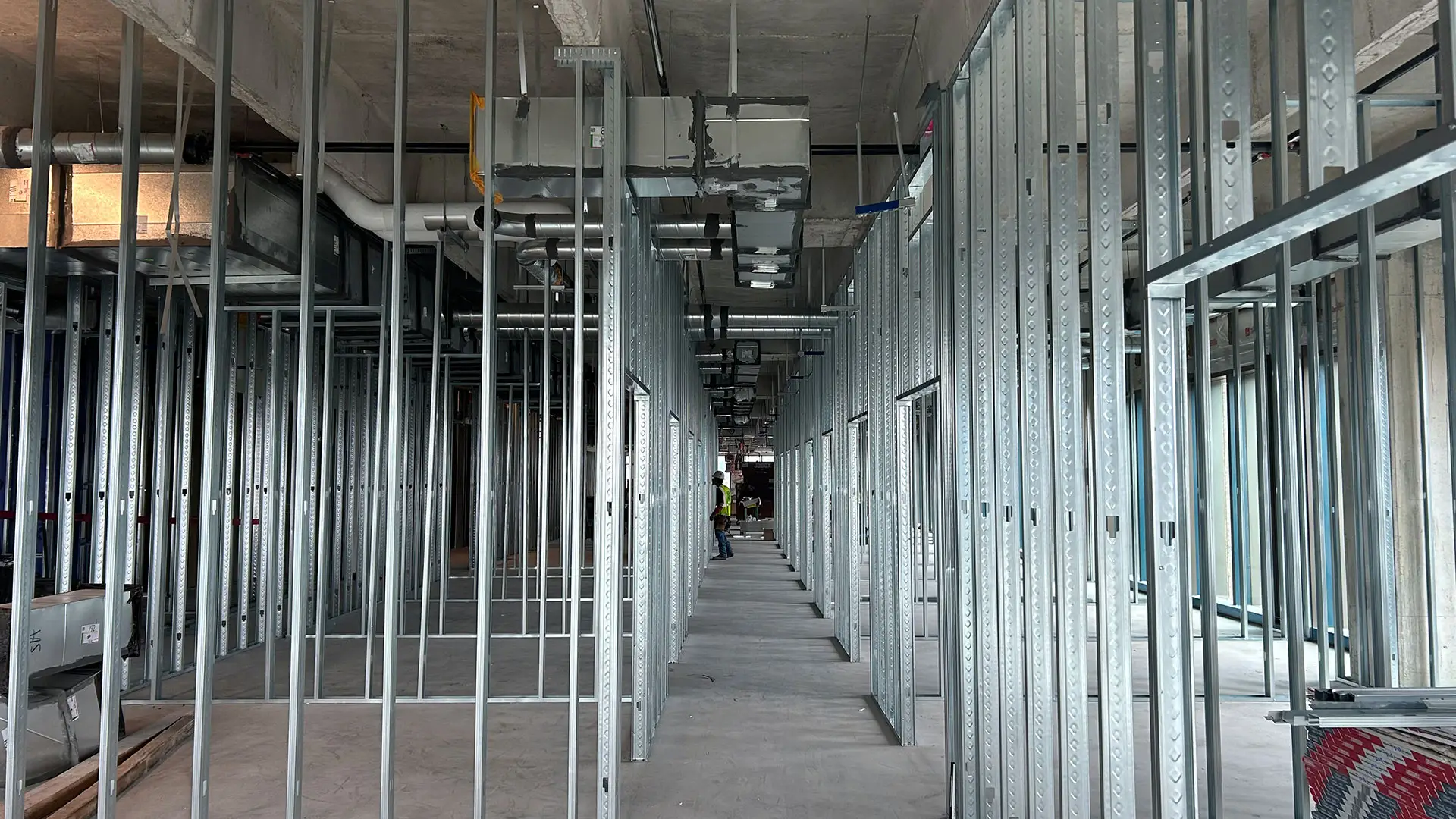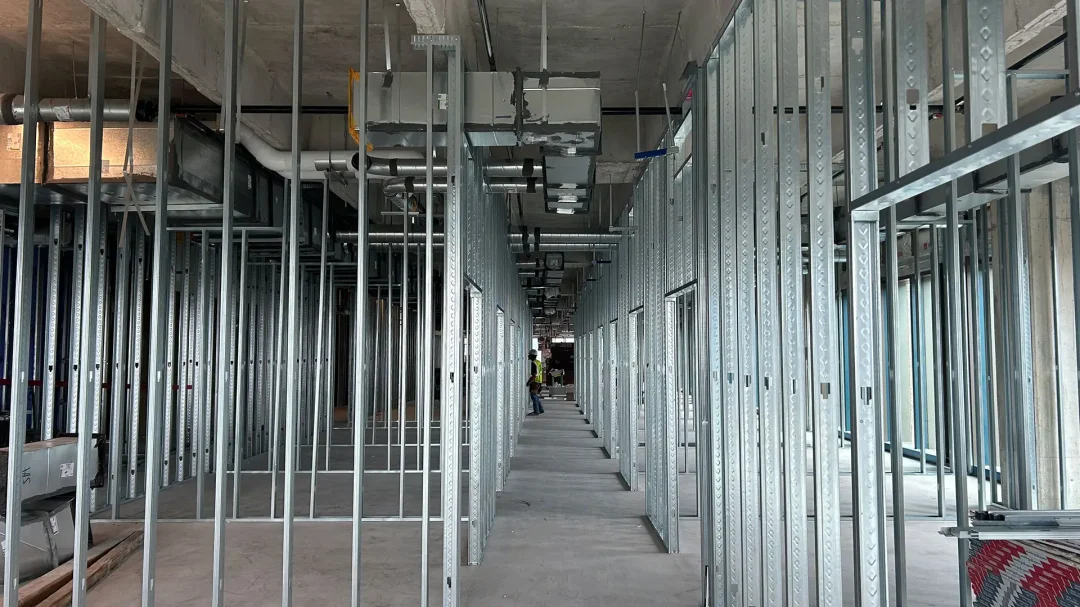
Interior work in the 1501 Lavaca State Office Building (Photo courtesy of JE Dunn.)
June is officially a month of change with spring breezes turning to warmer temperatures, school vacations beginning, and people taking to the road and sky for summer travels. Therefore, in this month of change, it seems fitting that we celebrate the transition taking place on Phase II of the Capital Complex Project.
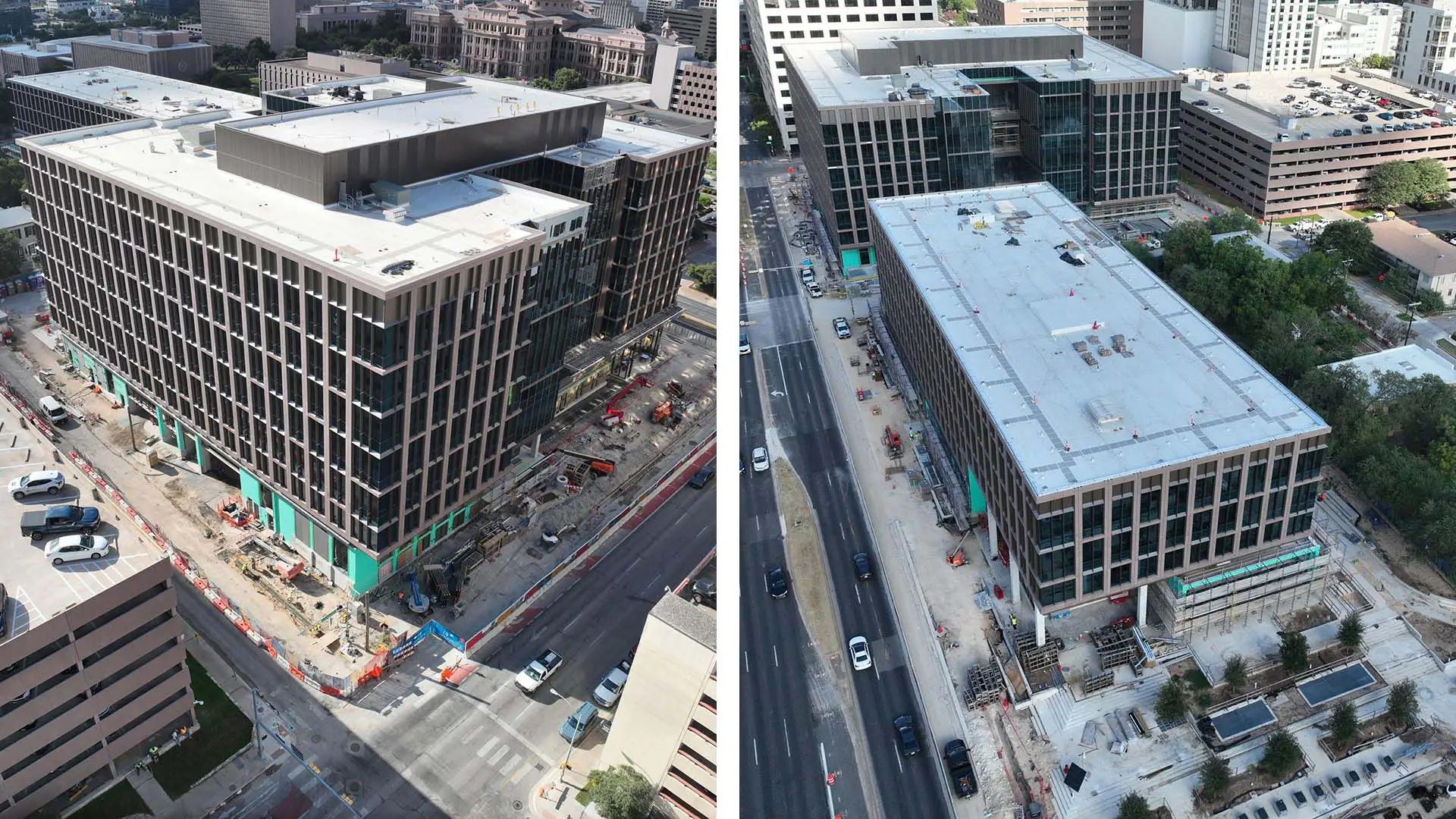
The exterior of both the 1501 Lavaca and 1500 Congress buildings will be majorly complete in June, so the focus of the jobsite is changing from external to internal activities. There is a lot of movement and an increase of workers on the project sites. The trades that specialize in interior work, such as framing, drywall, flooring, and communication cabling are moving onsite as the heavy, external equipment is coming down. The large tower crane that was a fixture of the 1501 Lavaca site for the last two years was removed in April, and the 1500 Congress tower crane will be dismantled at the end of June. The elevators in both buildings will soon be ready for construction use, which means the buck hoists, the temporary external elevators, will also come down this month.
Saying Goodbye to the 1501 Tower Crane
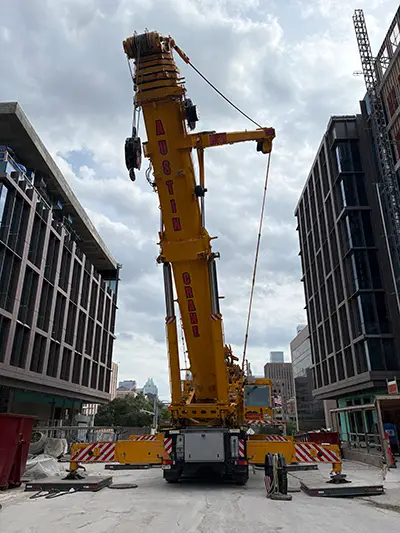
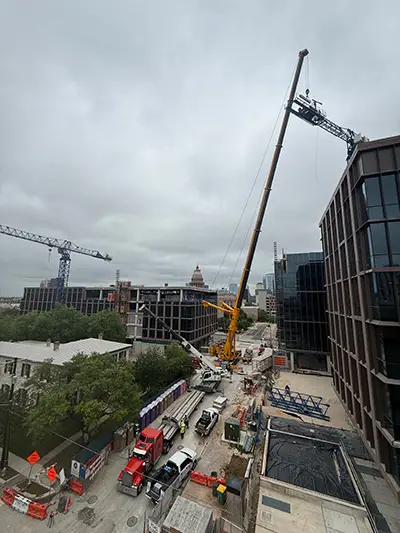
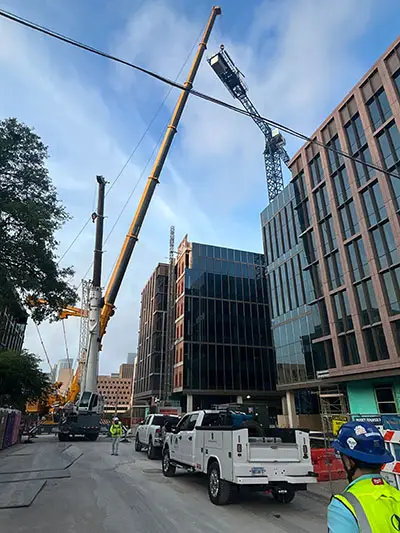
Above: An assembled 500-ton assist crane ready for work. The assist crane was used to dismantle the tower crane. While the assist crane was assembled, all the cables on the tower crane were disconnected, spooled, and secured. The process of dismantling the crane and removing it from a construction site takes three days. (Photo courtesy of JE Dunn)
Above: Disconnected sections of the crane’s jib lay on the ground. The mobile crane sits in front of the assist crane and loads the pieces onto trucks. It took sixteen semi-trucks to remove the crane from the 1501 Lavaca project site. As soon as the trucks were loaded, the in-demand tower crane was taken to another construction site for assembly. (Photo courtesy of JE Dunn)
Above: The counterweight of the crane being hooked up and ready to fly to the ground. Bringing down a tower crane is a teeter-totter game of balancing. The crane is dismantled in an exact order to maintain the counterbalance and prevent the crane from tipping over. Crane pieces range in weight from 1,000 to 20,000 pounds. (Photo courtesy of JE Dunn)
It’s Always a Good Time to Talk About Safety
During May 4-8, construction crews across the U.S. celebrated National Construction Safety Week. The theme of this year’s celebration was “All In Together” centered on the three pillars of Recognize, Respond, and Respect. With the additional work crews moving onto the Capital Complex project sites, Construction Manager at Risk JE Dunn took advantage of the week-long celebration to highlight the safety risks associated with the new activities beginning on the project. Safety week activities included a prize raffle for jobsite workers and daily speakers, including a local representative of OSHA. The speakers covered a wide range of topics, including:
- Fall protection
- Ladder safety with a focus on work in small, tight spaces
- Preventing complacency while doing repetitive tasks
- The role of proper storage and site cleanliness in project safety
- Current safety trends in the U.S.

“Safety Week is a show of force, an opportunity for people, companies, and even competitors, to work together and celebrate the incredibly hard work by people in our industry who make safety the foundation of everything they do.”
– constructionsafetyweek.com
The Name of the Game is Efficiency and Progress
To get the site ready to tackle the building interiors, the project team has been busy completing major systems work. A critical activity is air conditioning the buildings. Sensitive materials such as flooring and cabinetry must be installed in temperature-controlled spaces to protect the materials from warping. Conditioning the buildings will also help protect workers from heat-related injuries as the summer temperatures rise.
To complete the necessary electrical work, Tumlinson Electric, LLC, the project electrical contractor, has set up stations in the 1501 Lavaca garage where apprentices are prefabricating junction boxes attached to conduit. Using prefabrication techniques for this repetitive work increases efficiency, makes installation quicker, and provides the apprentices valuable experience.
Another benefit of completing the exteriors is that JE Dunn has opened field offices inside both the 1501 Lavaca and 1500 Congress buildings. This operational milestone saves time by keeping teams on site. The offices provide space for daily foreman and stand-up meetings, with six-week planning boards displayed on the walls. Together, these spaces support efficiency through faster communication and decision-making.
As we head into summer, the excitement of watching the new buildings rise may be behind us, but the joy in watching the interior spaces take shape is heating up.